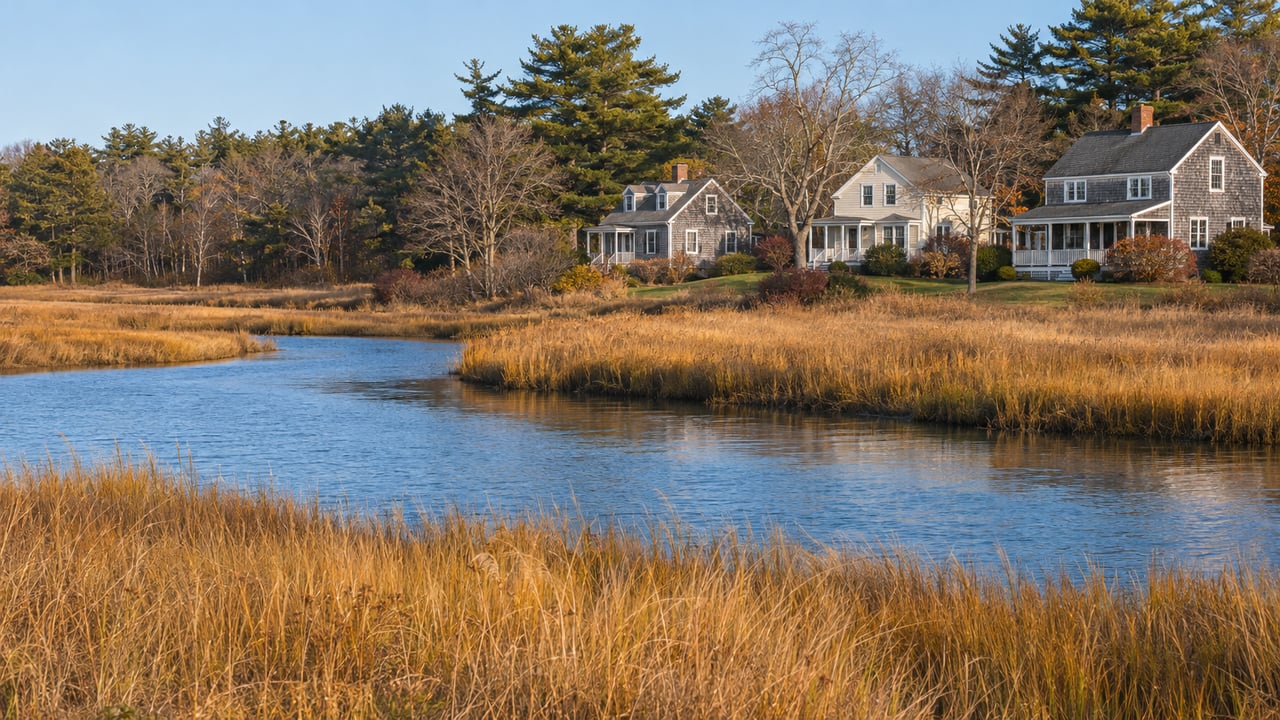
A cottage in Wells can go on Airbnb tonight without a town permit, registration or fee. It is still true because the Select Board tabled its first short-term rental ordinance in early September, the same night it advanced mobile-home lot-rent stabilization. The drafts the town has circulated since January 2025 also disagree about which parts of Wells would keep the right to rent at all.
For a buyer counting on rental income, that disagreement matters more than any occupancy projection. Wells has written its rules twice without knowing how many rentals it has, and the map changed between the two versions. Where a property sits relative to Route 1, and what paperwork comes with it, could end up deciding what the property is allowed to do.
A Town Writing Rules Without a Count
The town has no data on its short-term rentals. Speaking to Spectrum News Maine in late August 2026, Town Engineer and Planner Michael Livingston said there are currently no regulations at all. Owners don't have to register or report their properties, "which means officials don't even know for sure how many short-term rental properties there are in town."
According to that report, the effort started during the pandemic. When the state temporarily restricted lodging operators from booking out-of-state guests, Wells officials had no way to find or identify rental owners. "That's where the conversation started," Livingston said. He described the ordinance as having very few regulations, built as a platform for future rules such as licensing.
Without a count, a draft can't be checked against what is actually on the ground. That helps explain why the two drafts on record look so different.
The Map Moved Between Drafts
The first version shows up in a Planning Department memo dated January 10, 2025. The second shows up in an August 12, 2026 memo prepared for a possible November 2026 special town meeting. Neither is in effect, and the earlier one has been replaced. Side by side, they show how much the question of where rentals belong has shifted.
| January 2025 draft | August 2026 draft | |
|---|---|---|
| How it decides where rentals go | Bars STRs from named zoning districts | Creates a Short Term Rental Overlay District on the zoning map |
| Areas left out | Rural, Resource Protection, Transportation Center, College and Light Industrial districts | Everything outside the overlay, plus the Resource Protection and Harbor districts inside it |
| Existing rentals | Grandfathered if 24 months of rental records are provided and inspections occur | Planning Board proposed language allowing changes or expansions to rentals the overlay would make nonconforming |
| Parking | Listed among performance standards | Planning Board proposed 1 space per bedroom |
| Permits | Licensing with annual fees, plus a building/use permit | Planning Board proposed adding a use-permit requirement |
The January 2025 approach removed specific districts and left the rest of town open. The 2026 approach does the reverse. It draws one zone where rentals are allowed, and News Center Maine reported that new short-term rentals would not be allowed in the more residential areas outside it. A house could fall in the permitted area under the first draft and outside it under the second without anything about the house changing.
Route 1 and the 500-Foot Line
The York County Coast Star reported on August 21, 2026 that the overlay would cover lots east of Route 1 to the Atlantic and lots within 500 feet west of the corridor, excluding properties in the Resource Protection and Harbor districts. Under that draft, the line that mattered was a measured distance from a highway, not a neighborhood name.
Opposition to the zone came from inside town hall as well as from neighbors. The Coast Star's August 10 coverage reported that not all Planning Board members liked the idea. Livingston's August 12 memo put it more directly. The board was "generally not in favor due to the creation of many nonconforming properties and restrictions on property use."
In practice, "nonconforming" would have meant this. A rental already operating west of the 500-foot line would have become a use the zoning no longer allowed. That is why the Planning Board proposed new language in the town's nonconforming-uses section to cover changes and expansions to those properties. The parking proposal adds a second, quieter filter. At one space per bedroom, a four-bedroom beach house would need four spaces. On a small lot, that number decides as much as the zone does.
Why the Board Set It Aside
The joint public hearing with the Planning Board was on the September 1, 2026 agenda, alongside a data center moratorium and two mobile-home lot-rent measures. News Center Maine reported that the Select Board tabled the short-term rental rules because it needed more time to work out logistics. Board members said they had been working on the issue for about two years. The ordinance would have required a town permit to list a property on rental sites like Airbnb and Vrbo, and some members said permitting would strain the town's already busy code enforcement officer.
The same News Center Maine report captured both sides of the room. One resident said the rentals mean "a reduction in housing available for residential use. It takes up that balance and pushes commercialism into the neighborhoods." A short-term rental owner answered, "The town does depend on short-term rentals, especially at the beach. There's a lot of our economy that depends on that, our stores, our restaurants."
Both points carry weight in a beach town with year-round neighborhoods. Any version of the rules will have to settle that tension somewhere on the map, which is why the map is the part to watch.
Where Things Stand After Nov. 3
The August memo was titled for the November 2026 special town meeting. When Wells voters went to the polls on November 3, they approved the mobile-home lot-rent stabilization ordinance by 5,594 votes to 1,494, according to the Portland Press Herald. The short-term rental ordinance, tabled in September, has not become law.
For a buyer, tabled means unresolved. Rentals are unregulated today. The town has written two different versions of how they might be regulated, both versions are public, and the Select Board has said it still wants rules. A rental property bought this winter is bought under the current rules, but whoever owns it next year may have to answer under whatever version comes back.
Reading a Wells Rental Property Against Both Drafts
Neither draft is law, but together they show which facts the town has treated as relevant. Before an offer, each of these can be checked against the record:
- Distance from Route 1. Is the lot east of Route 1, within 500 feet west of it, or beyond that line? Under the August 2026 overlay, that placement decided whether new rentals were allowed.
- Zoning district. Resource Protection was excluded in both drafts. The Harbor district was carved out of the 2026 overlay, and the Rural, Transportation Center, College and Light Industrial districts were excluded in 2025.
- Bedrooms and parking. Count the on-site spaces against the bedroom count, since the Planning Board's proposal tied the two one-to-one.
- Rental history on paper. The January 2025 draft tied grandfathering to 24 months of rental records and inspections. A seller who can show an organized booking history is offering something the town has already treated as worth asking for.
Questions about a specific parcel's zoning can go to the Wells Planning & Development office at 208 Sanford Road, 207-646-5187. This post reports on draft ordinances and public coverage. It is general information, not legal, tax or financial advice, so please confirm how any rule would apply to your property with an attorney or the town.
A Few Questions Buyers Ask
Do Wells short-term rental owners need a permit right now? No. Town Planner Michael Livingston told Spectrum News Maine that no regulations currently exist and that owners are not required to register.
Was the overlay district rejected by voters? No. The Select Board tabled it in early September to work out the logistics.
Does the 2025 grandfathering rule apply? No. It belonged to an earlier draft that the August 2026 version replaced, and neither draft has been adopted.
If you're weighing a Wells cottage for rental income and want to know where a specific property sits against both versions of the map, Great Seacoast Homes can walk through the parcel, the parking and the rental paperwork with you before you commit. Start with a conversation, or request a personalized home valuation that accounts for what the property can do as well as what it is.