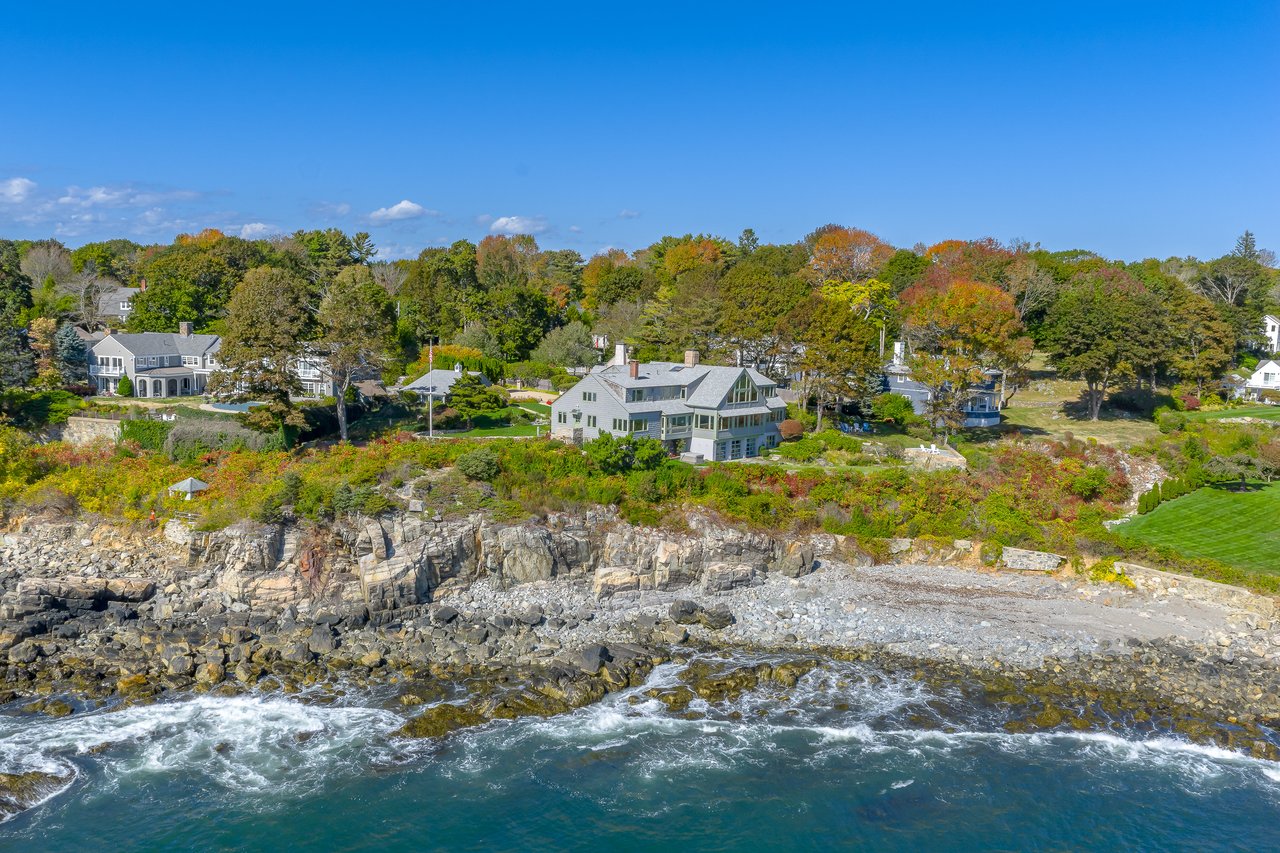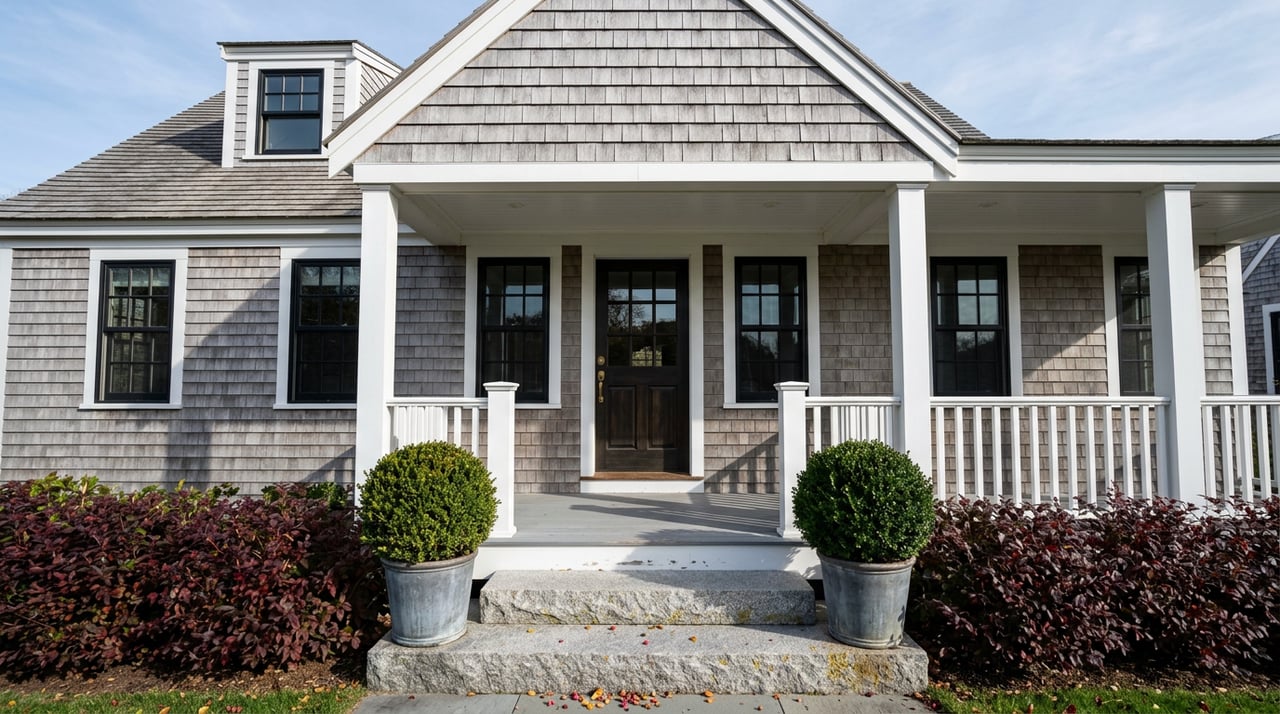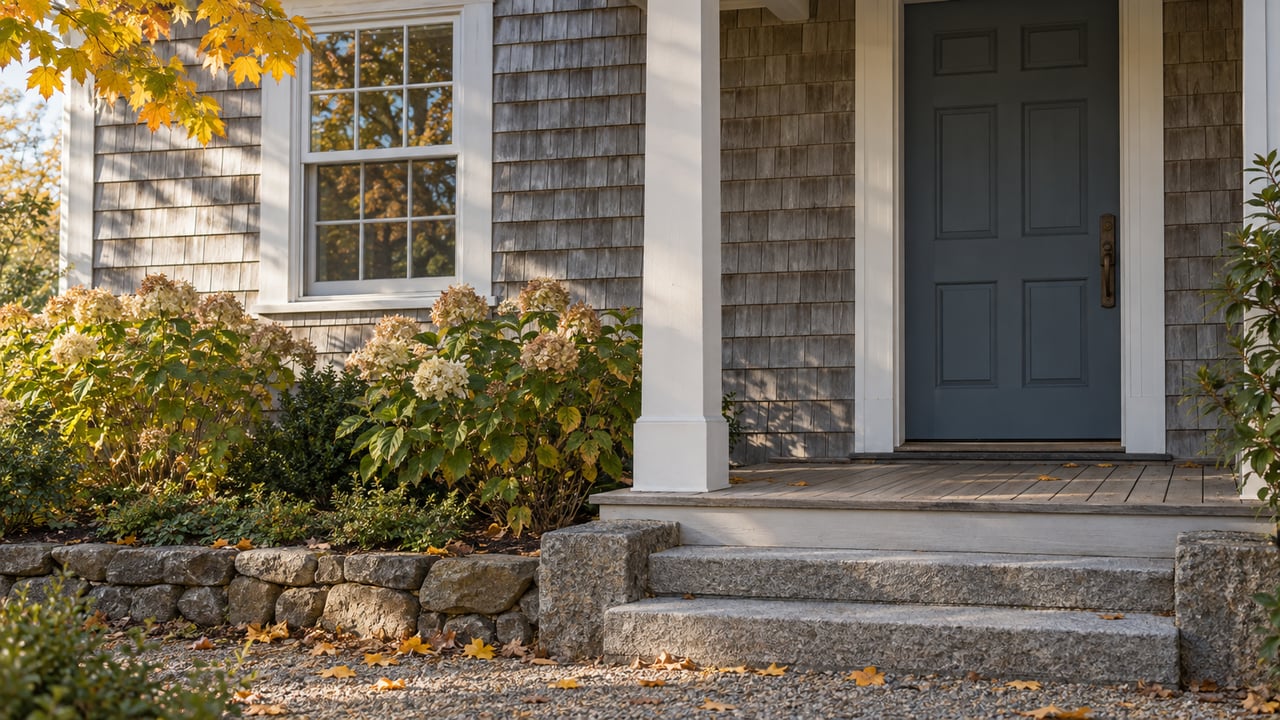
Pull up South Berwick's home price on three different sites in the same week and you will get three different answers, sometimes by tens of thousands of dollars. One tracker's three month rolling median for the period ending in May 2026 puts the town at $509,000. The same tracker's single month average, reported in that same snapshot, comes in at $585,000, a gap of more than $75,000 depending on which calculation you trust. A separate site's July 2026 figure lands at $567,500. A county records based estimator puts the median single family value at $524,000 as of July 2026. None of these are wrong. They are all describing a market too small to hold still long enough for one number to mean much.
South Berwick sold as few as 6 to 8 single family homes in some recent months, according to the two trackers that report monthly counts. One of them recorded 8 sales in July 2026, down from 19 in July 2025. Another recorded 8 sales in May 2026, up from 6 the year before. A home data platform that tracks the town outright suppresses its own year over year comparison, stating that six active listings is too thin a sample for a reliable read. That is not a caveat buried in fine print. It is the whole story.
Why Six Sales a Month Breaks the Math
A median is the middle value in a sorted list. When that list has 8 entries instead of 800, one unusually large or small sale does not get smoothed out by the rest of the data. It becomes the data. Sell one riverfront estate near the Piscataqua for well above the town's typical price and the median jumps. Sell one aging cape that needs a new roof and it drops back down. Neither sale reflects a shift in what South Berwick homes are worth. Both reflect who happened to close that month.
The clearest evidence of this sits inside a single data source. The same tracker reporting a $509,000 rolling median for the three months ending in May 2026 also reported an $585,000 average sale price in that same update, a 25.5 percent jump year over year on the average even as the rolling median rose a comparatively modest 14.1 percent. A median and an average measuring the same market in the same report should not diverge that sharply unless a handful of high end closings are pulling the average up while the median, anchored by the middle transaction, holds closer to what a typical buyer is actually paying. That gap between mean and median is itself a symptom of a market running on a small number of transactions rather than a broad, stable trend line.
Even the basic count of what is for sale does not agree across sources. One valuation site lists 6 active listings in town. Another lists 104 current listings in the same zip code. Whether that gap comes from stale data, different geographic boundaries, or different definitions of active, the lesson is the same: in a market this thin, even inventory counts do not reconcile.
The Number Worth Trusting More
If the median is noisy, price per square foot tells a steadier story, and it points somewhere the median does not. Over the same three month window ending in May 2026, the median sale price rose 14.1 percent year over year, but the median price per square foot fell 18.5 percent over that identical period. A rising median and a falling price per square foot cannot both reflect the same homes getting more valuable. They reflect a change in which homes sold.
South Berwick's housing stock skews old. As of a mid-2026 snapshot, roughly 32 percent of homes in town were built before 1950, the kind of in-town mill village housing that tends to run smaller, with one bathroom and modest bedroom counts. When a disproportionate share of a month's sales comes from larger, newer construction, the median price climbs even while the cost per square foot of that same larger home comes in lower than a tiny historic cape's per foot cost would. That is not the market appreciating. That is the mix of what changed hands shifting for a month or two. A buyer comparing this year's number to last year's is better served asking what square footage sold, not what the sticker price says.
Why the Supply Story Is About to Change
The reason South Berwick's market runs this thin is worth understanding on its own terms, and it is about to be tested by a state law most buyers have never heard of. Maine's LD 1829 takes effect in July 2026 and substantially increases the density municipalities must allow within their designated growth areas. Because South Berwick's growth area boundaries are defined in its own comprehensive plan, the town has spent 2026 racing to redraw that map before the law locks in default state standards the town did not choose.
The town calls this effort Planning for Change, and it has been anything but quiet. The Town Council appointed the Planning Board as a Comprehensive Planning Committee in January 2026. Staff began neighborhood by neighborhood synoptic surveys in late January, documenting building spacing, height, and massing without entering private property, and the town held public community meetings in March, April, and May to walk residents through where growth area lines might move and what that means for future development patterns. The declared goal is to keep density increases concentrated where infrastructure can support them rather than let a one size fits all state standard apply to every rural corner of town.
Alongside the zoning rewrite, the town has already put one concrete parcel into motion. In spring 2026, South Berwick issued a request for proposals to redevelop 9 Railroad Avenue into housing described in the town's own solicitation as affordable and appropriate in scale to the surrounding neighborhood, with the option for a mixed use project that adds neighborhood scale commercial space alongside it. A pre-proposal meeting was held at Town Hall on Main Street in April 2026, with proposals due the following month. That is a specific, town-sponsored addition to housing supply moving forward independent of whatever the private resale market does in any given month.
The corridor connecting much of this activity is also under construction planning. MaineDOT opened a public comment period in February and March 2026 on reconstructing the Route 4 and Route 236 intersection, a stretch the town's own comprehensive plan and transportation studies have flagged for higher than expected crash rates and operational strain. For a buyer evaluating a property along that corridor specifically, that is a live infrastructure project worth tracking rather than a settled fact of the neighborhood.
What This Means If You're Comparing South Berwick to the Coast
South Berwick shows up on buyers' radar largely because it sits inland from the pricier waterfront towns of southern York County while still offering highway access and a walkable historic center along the Piscataqua. Search data from one national listing platform found that in the first quarter of 2026, more out of area buyers searched for homes in South Berwick from the Boston metro than from any other outside market, ahead of Washington and New York. That pattern lines up with a buyer priced out of coastal towns looking a bit farther inland for a lower entry point without leaving the region entirely.
For that buyer, the headline median is close to useless as a month to month signal. A more reliable approach is to track price per square foot across a rolling six to twelve month window rather than any single month's figure, and to pay attention to how the town's growth area map gets redrawn over the next year, since that map will shape where new density, and new supply, actually lands.
A few questions worth asking directly
Why do different websites show such different median prices for South Berwick? Because the town closes so few homes in a typical month, often single digits, that one large or small sale can move the median by tens of thousands of dollars depending on the exact window a site measures and whether it reports a median or an average.
Will the new state zoning law mean more homes get built in town? It is likely to allow more density within whatever growth areas the town's revised comprehensive plan designates, but South Berwick is actively redrawing those boundaries through 2026 specifically to control where that density applies rather than letting the state's default standard blanket the whole town.
Is South Berwick still less expensive than the coastal towns nearby? The town continues to draw buyer interest as a relatively lower entry point inland from the coast, based on out of area search patterns, though the volatility in its own monthly price data makes a precise dollar comparison to any single coastal town harder to state with confidence than the headline numbers suggest.
If you are trying to make sense of what a specific South Berwick property is actually worth against this kind of noisy backdrop, or how the town's zoning changes might affect a parcel you are considering, Great Seacoast Homes can walk through the comparable sales that matter for your situation rather than the month's headline median.